A Design Sprint to validate a new data dashboard — before building anything.
Context
Heartbeat Medical builds software for hospitals and clinical teams that collects patient-reported outcome data. The team had a major initiative ahead: a new dashboard to make that data meaningful for medical partners.
The problem was that nobody could agree on what to build. Which data to include, who it was actually for, what "useful" even meant for doctors versus management. A traditional approach would have taken months of alignment meetings.
Instead, we ran a Design Sprint.
Challenge
Three questions we couldn't answer from the inside:
Which data should we show? The platform captured a wide range of clinical metrics. Deciding what mattered — and how to handle missing or low-quality data honestly — was both a product and a trust problem.
Who is this actually for? Doctors and hospital management had different motivations and different definitions of useful. A single dashboard couldn't serve both without intentional choices.
How do we create a habit of use? Good data tools go unused if they don't fit into existing workflows.
Approach
A cross-functional team — product, design, engineering, and sales — cleared the calendar for one week. I facilitated.
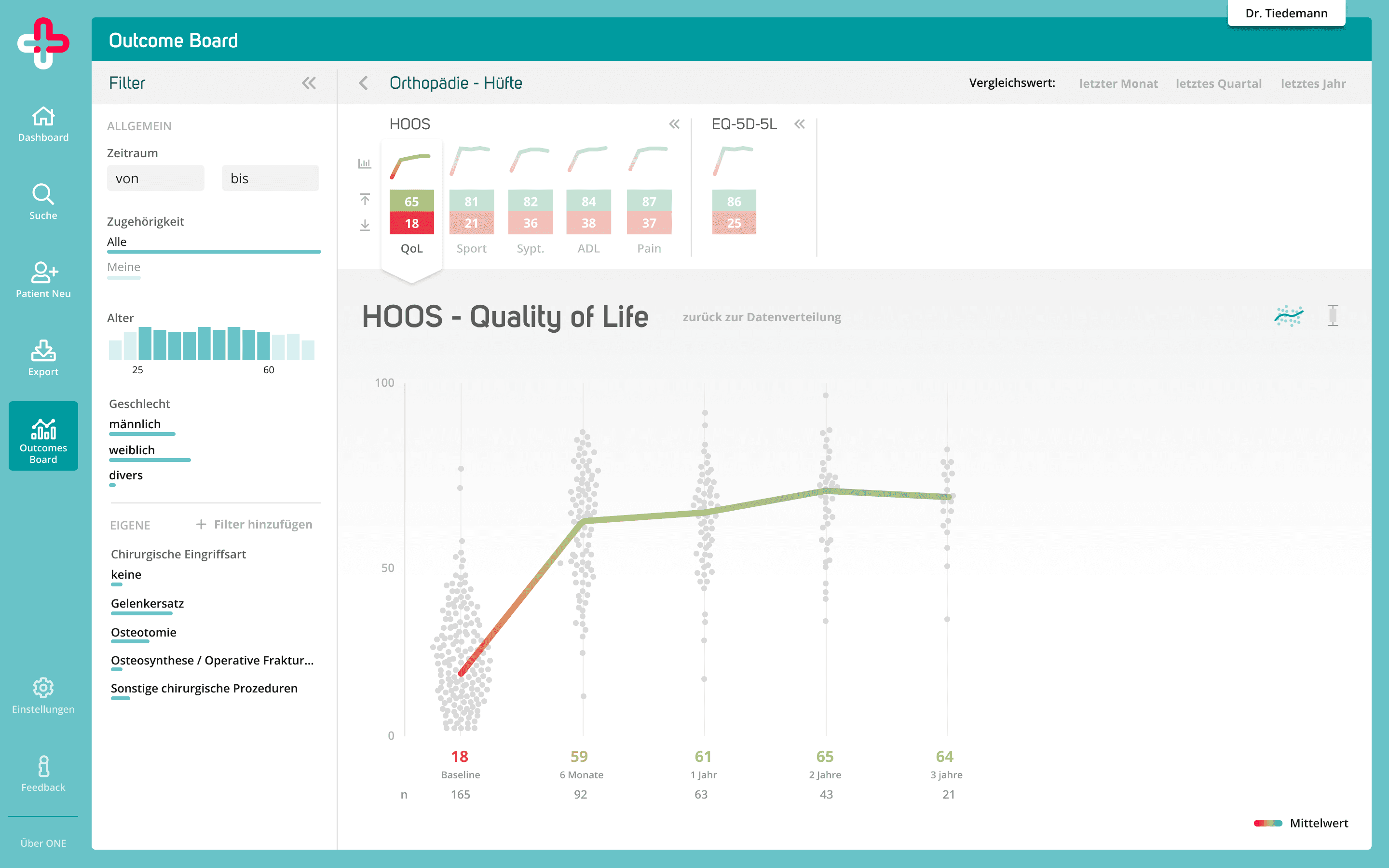
We set a single sprint goal: Enable insights from collected data.
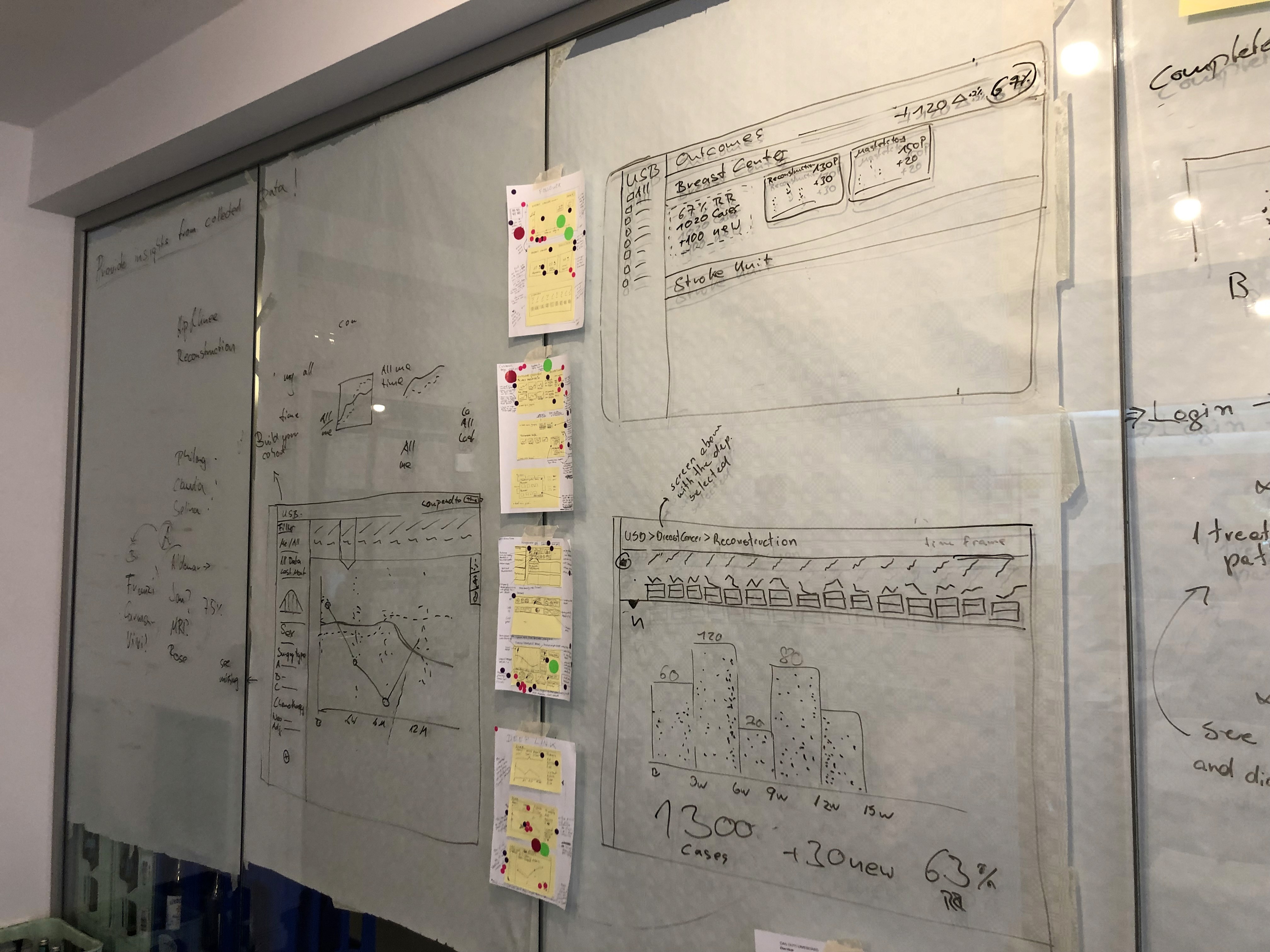
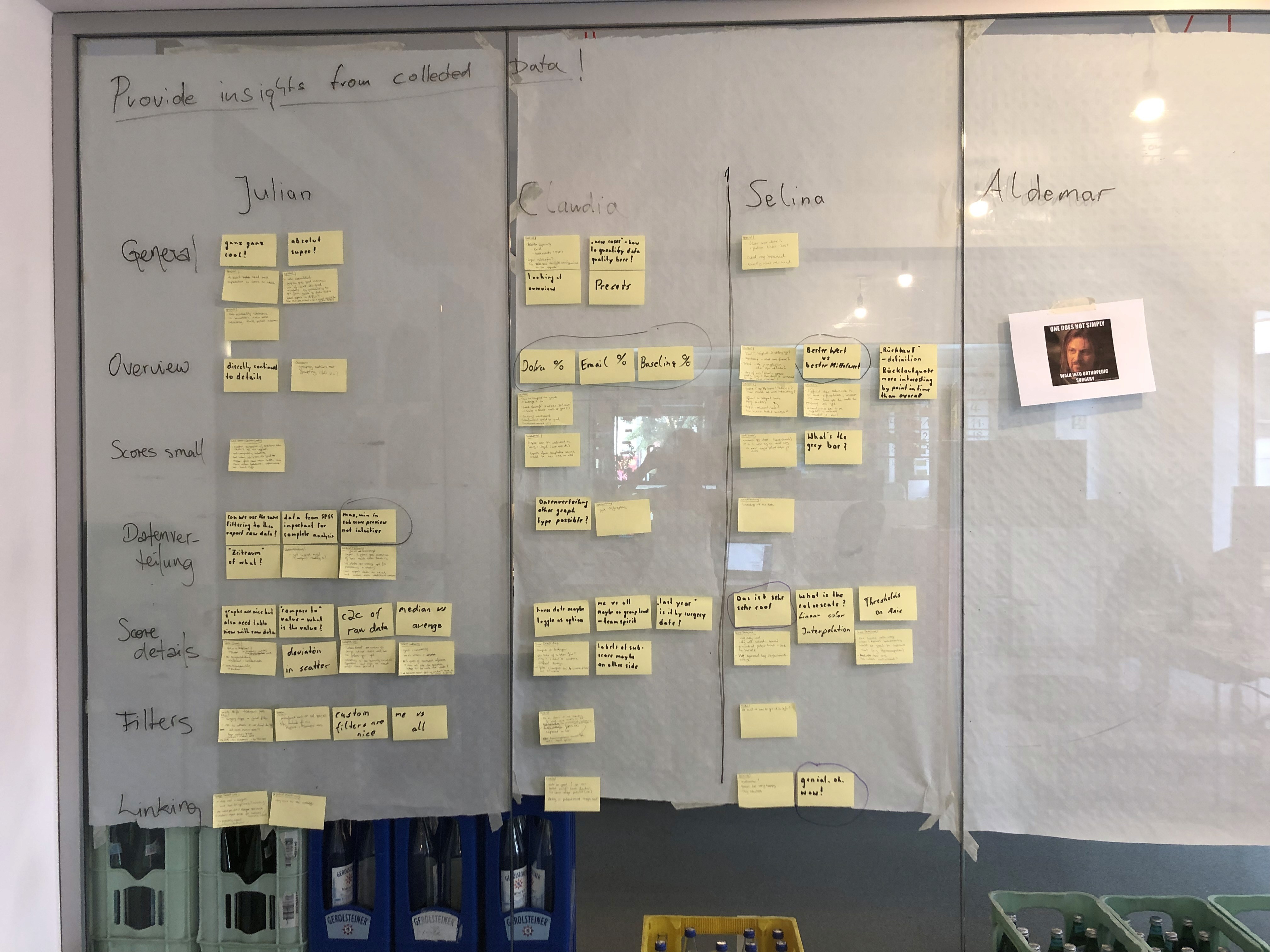
Monday we built a Journey Map and interviewed five clinicians from the Charitè and USB hospitals before the day was out. Tuesday everyone sketched individually — developers included. Wednesday we voted, decided, and storyboarded. Thursday I led the prototype build in Figma, using our existing design system to move fast. Friday we tested with users while the team watched via video stream and took structured notes.
Key Insights
One quote from Friday stuck with the whole team:
"It's good to find questions. Regular reporting will get them used to it. Show the top performer."
The dashboard's job wasn't just to display data. It was to create a habit of looking.
We also learned that doctors and management needed fundamentally different things from the same tool, and that data quality wasn't a technical problem to solve later, it was a UX concern from day one.
Action Plan
Outcomes
The team left with a validated dashboard concept, clarity on which data to prioritize, and a shared understanding of not just what to build but why, because everyone had been in the room when the decisions were made.
The Outcome Board prototype was presented to the full company a few weeks later and launched on the same year.

Client Feedback
Product Manager - Heartbeat Medical
Reflections for Founders & Leaders
Five focused days built alignment that months of meetings couldn't. A few things that made it work: interviewing users on day one before any sketching; including the whole team, not just design; and trusting the structure — individual sketching and silent voting exist for a reason.
Services
Design Sprint Facilitation
Workshop Design
User Interviews
UX Strategy
Prototyping
Opportunity Scan
Helping a B2B SaaS team see their product clearly.
How an Opportunity Scan surfaced why users couldn't find the value that was already there.
Opportunity Scan
Helping a SaaS team identify their real bottleneck
How an Opportunity Scan uncovered why a product team was stuck—and what they actually needed to move forward.